
Core Nutritional Classes for Catfish
Catfish feed requires certain nutrients that will help the catfish farmer optimize the growth as well as increase the profit on their catfish farming business. Below are the 4 classes of nutrients, in order of importance, essential in any catfish feed formulation:
Protein: This class of nutrient is required for building body tissue and replacement of damaged tissue. It contains physiological molecules such as hormones and enzymes. It can be obtained from plants and animals.
Energy (Carbohydrate): This nutrition provides the energy needed for catfishes. Grains of cereals and cassavas are the major source of this nutrient.
Vitamins and minerals: Growth, health, and body process are controlled by this class of nutrition. For example, organic and inorganic chemicals are found in vitamin and minerals.
Fat: Fat contains vital fatty acids and also enhances energy delivery in feed.
To learn about the physical process of turning these nutrients into floating pellets, visit our guide on [ how to make fish feed ].
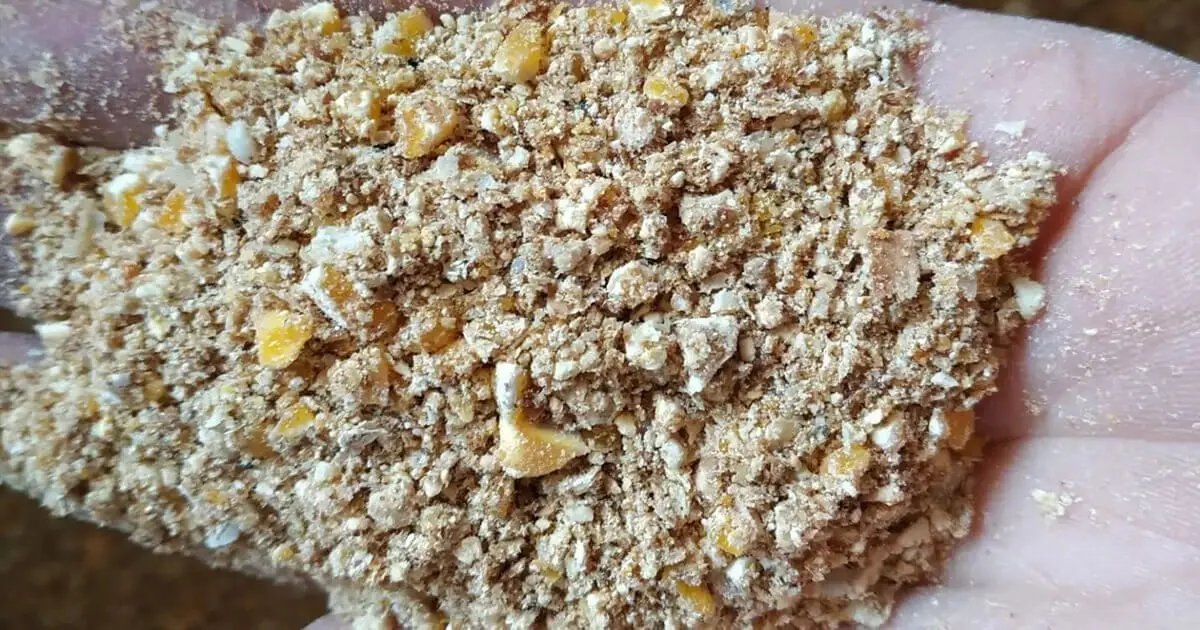
Nutritional Catfish Feed Ingredients
There is a need to understand nutritional contents of available catfish feed ingredients so as to understand and select appropriately ingredients that will meet the nutritional needs of your catfish. Each class of nutrition is analyzed separately below:
Table 1: Nutritional Level of Animal Proteins
| Animal Protein | Energy (MJ/kg) | Crude Protein (%) | Fats (%) | Calcium/P (%) | Lysine (%) |
| Fish Meal | 13.5 | 65 – 72 | 8 – 10 | 3.0 | 4.8 |
| Meat Meal | 11.2 | 50 – 51 | 10 | 8 | 2.6 |
| Blood Meal | 15.2 | 88 – 90 | 1 | 0.4 | 7.1 |
| Feather Meal | 13.7 | 80 – 85 | 7 | 0.4 | 2.3 |
| Poultry Meal | 13.1 | 60 – 64 | 13 | 2.0 | 3.1 |
Table 2: Nutritional Level of Plant Proteins
| Plant Protein | Protein (%) | Energy (MJ/kg) | Calcium (%) | Lysine (%) | Methionine (%) |
| Soybeans Meal | 44 – 48 | 10.7 | 0.20 | 3.2 | 1.4 |
| Cottonseed Meal | 40 – 41 | 9.8 | 0.66 | 4.2 | 1.4 |
| Sunflower Meal | 46 – 47 | 9.2 | 0.30 | 3.5 | 2.3 |
| GNC (Groundnut) | 45.6 – 61.8 | 16.1 | 1.7 | 3.2 | 1.0 |
Table 3: Nutritional Level of Energy Base Ingredients
| Ingredients | Protein (%) | Energy (MJ/kg) | Calcium (%) | Lysine (%) |
| Wheat | 13 | 13.1 | 0.05 | 0.5 |
| Sorghum | 9.0 | 13.6 | 0.02 | 0.3 |
| Maize | 8 – 11 | 13.4 | 0.02 | 0.27 |
| Cassava | 2.5 | 6.7 | 1.6 |

High-Performance Catfish Feed Recipes
From the nutritional table of certain catfish feed ingredients, a sample of simple catfish feed formulation can be generated thus. These catfish feed formulas are recalculated to a 100% (100kg) industrial base for accurate production.
Sample 1: High-Protein Starter Recipe (Target CP: ~42%)
| Ingredients | Percentage (%) | Weight per 100kg |
| Maize / Wheat / Cassava Flour | 24.5% | 24.5 kg |
| Soya / Sunflower / Cottonseed | 29.4% | 29.4 kg |
| GNC / Benseed | 19.6% | 19.6 kg |
| Fish Meal (72%) | 24.5% | 24.5 kg |
| Additives (Premix, Lysine, Salt, DCP) | 2.0% | 2.0 kg |
| TOTAL | 100% | 100 kg |
Sample 2: Industrial Grower Recipe (Target CP: ~35%)
| Ingredients | Percentage (%) | Weight per 100kg |
| Maize | 19.6% | 19.6 kg |
| Poultry Meal | 14.7% | 14.7 kg |
| Fish Meal (72%) | 9.8% | 9.8 kg |
| Blood Meal | 4.9% | 4.9 kg |
| Soya Meal | 29.4% | 29.4 kg |
| GNC | 19.6% | 19.6 kg |
| Additives (Premix, Lysine, Salt, Vit C) | 2.0% | 2.0 kg |
| TOTAL | 100% | 100 kg |
Achieving Buoyancy with Extrusion Technology
While the core nutritional catfish feed formulation ingredients are the same, the main difference is usually in the manufacturing process. The catfish feed formulation must undergo high-temperature extrusion if you want to achieve 24-hour buoyancy for catfish farming. Our [ Floating Fish Feed Extruder ] ensures the starch in maize and cassava is fully gelatinized, creating the porous structure needed for high-quality floating feed.
