
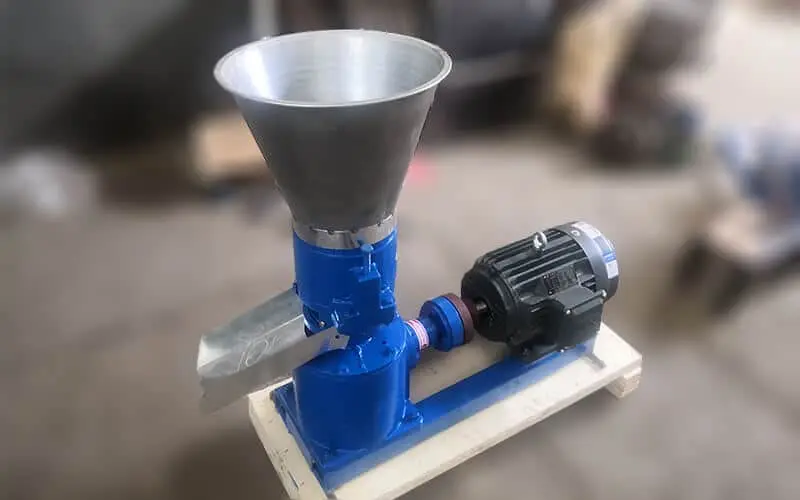
| Model | VTKLP 300 |
| Capacity | 600-700kg/h |
| Application | Making rabbit feed pellets for commercial rabbit farms, including breeding rabbits, growing rabbits and weaning kits. |
| Power Type | Electric motor, diesel engine or petrol engine |
| Power | 18.5kw |
| Raw Materials | corn meal, alfalfa, straw meal, grass meal, sunflower meal, nut meal, rice husk, wheat bran |
| Final Pellet Size | 2.0-8.0mm |
| Moisture Required | 12–18% |
| Die Diameter | 300mm |
Why Use a Specialized Rabbit Feed Pellet Mill?
Rabbit feed processing requires specialized mechanical rabbit feed pellet mill. Rabbits possess a fragile cecal digestive system and open-rooted, continuously growing teeth. Feeding loose mash may increase digestive problems, feed waste and uneven nutrient intake.
Our specialized rabbit feed pellet machine utilizes high-compression-ratio dies to process high-fiber mixtures into extremely dense pellets. This prevents selective eating, stimulates vital saliva production, and helps maintain proper chewing activity and reduce feeding problems caused by loose feed.
By processing alfalfa and grains through our flat-die system, the machine produces uniform pellets with balanced fiber and protein distribution, helping reduce selective feeding.
Reduce Feed Waste and Improve Farm Efficiency
Loose feed often causes nutrient separation and feed waste during rabbit feeding. Pelletizing feed improves feed uniformity, reduces selective eating and helps farmers better control feeding costs.
Looking for a machine to make feed pellets for other animals? Check our multi-functional feed pellet mills.
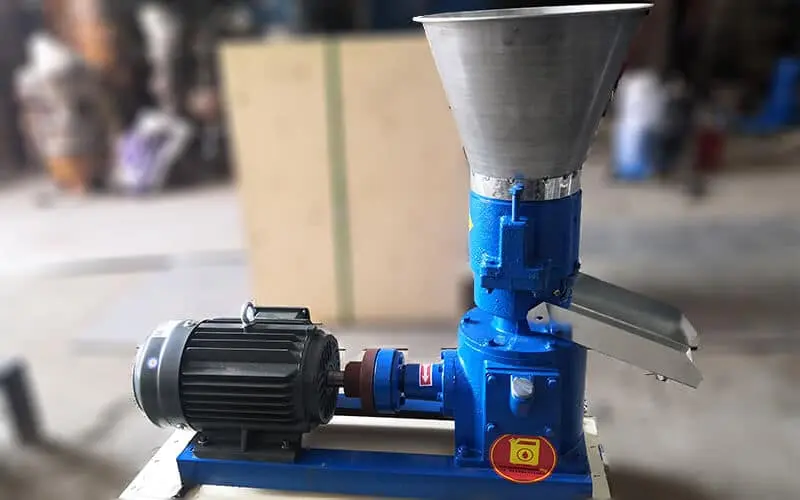
Rabbit Feed Pellet Mill Price & Configuration
Rabbit feed pellet mill price depends on capacity, motor type, pellet size, raw materials and shipping location.
Tell us your rabbit farm scale and feed requirements. Our engineers will recommend the suitable model and provide a factory quotation.
Rabbit Feed Pellet Mill Benefits for Farmers
| Problem | Pellet Mill Solution |
|---|---|
| Rabbit selects preferred ingredients | Uniform pellets prevent selective feeding |
| Feed dust loss | Dense pellets reduce feed loss |
| High storage volume | Compact pellets save storage space |
| Different growth stages | Adjustable pellet sizes |
Rabbit Feed Pellet Mill for Commercial Farms
Our rabbit feed pellet mill is designed for farmers and commercial rabbit producers who need stable daily feed production, consistent pellet quality and lower feed processing costs.
Recommended VTKLP Setup for Rabbit Farms
Rabbits have highly sensitive digestive systems and require specific pellet diameters.
| Farm Scale | Daily Feed Demand | Recommended Model | Pellet Size | Suitable Application |
|---|---|---|---|---|
| Small rabbit farms (<1,000 rabbits) | 50-200kg/day | VTKLP-125 / 150 | 2.5-3.0mm | Small-scale feed production and breeding farms |
| Medium rabbit farms (1,000-5,000 rabbits) | 200-600kg/day | VTKLP-210 / 230 | 3.0-4.0mm | Commercial rabbit production with stable feed demand |
| Large rabbit farms (5,000+ rabbits) | 600kg+/day | VTKLP-300 / 360 | 4.0-5.0mm | Continuous production and large-scale feed supply |
Economic Benefits of Producing Rabbit Feed Pellets
For a rabbit farm producing 500kg feed per day:
Loose feed waste can increase feeding costs due to dust loss and selective eating.
By producing uniform pellets on-site, farmers can:
✓ Reduce feed waste
✓ Improve feed utilization
✓ Lower dependence on commercial feed suppliers
✓ Produce fresh feed according to farm requirements
The actual savings depend on feed formula, farm size and operating conditions.
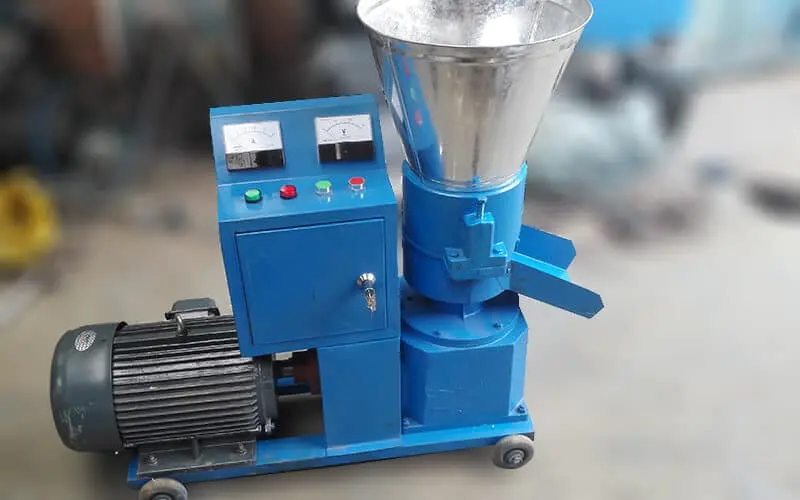
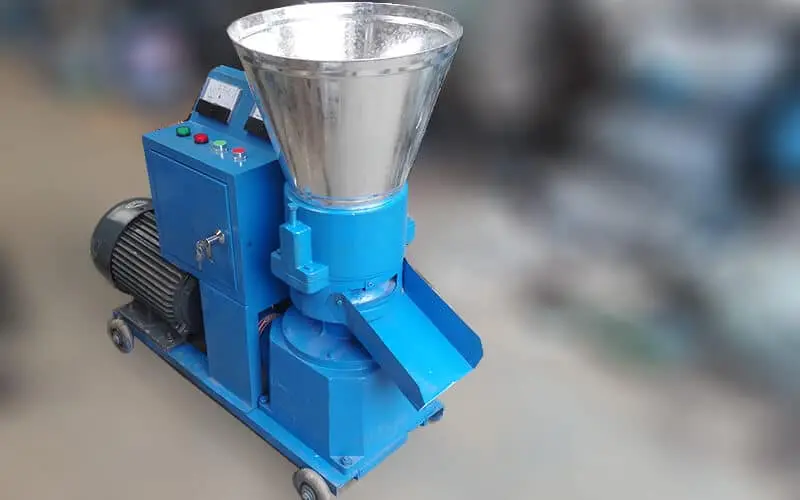
Biochemical Processing & Thermal Treatment
Thermal Treatment & Pellet Quality
During pelleting, friction heat improves pellet hardness and durability. Proper processing temperature helps bind feed particles, reduce pellet breakage and improve storage stability.
Raw Materials & Biochemical Processing
Rabbit feed pellet production requires balanced fiber and protein levels. Common materials include alfalfa, corn, rice bran, soybean meal and other plant-based feed ingredients.
Operating a rabbit feed pellet mill allows precise control of input variables:
| Nutrient | Recommended Level |
|---|---|
| Crude Fiber | 15%-17% |
| Crude Protein | 15%-18% |
| Fat | ≤3% |
Industrial-Grade Rabbit Feed Processing Flow
Our specialized feed processing system combining grinding, mixing, pelleting, cooling and packing.
- Grinding: Hammer mills pulverize raw materials to a particle size of ≤3mm.
- Mixing: Uniform blending achieves a Coefficient of Variation (CV) ≤7%.
- Pelleting: High-compression extrusion creates dense pellets.
- Cooling: Pellets exit the extrusion chamber at 75°C-85°C and must be cooled to below 12% moisture for storage.
- Screening & Packaging: Precision sieves ensure uniform pellet sizing.
The compact nature of pellets significantly saves warehousing and economical transport costs.
Check our Animal Feed Making Machine for poultry, livestock, and rabbit feed production.
Why Choose Victor Rabbit Feed Pellet Mill?
✓ Factory-direct manufacturer with flexible configurations
✓ Suitable models for different rabbit farm sizes
✓ Electric and diesel options available
✓ Spare parts supply and technical support
✓ Export experience with farms worldwide
Specification of Pelletizing Machine
Model: VTKLP 300
Power: 18.5kw or 22 kw
power type: electric motor,diesel engine or petrol engine
Capacity: 600–700kg/h
final pellets size: 2-8mm
die diameter: 300mm
Shaft speed: 380r/min
Outsize: 1020X820X980mm
raw materials: corn meal, alfalfa, straw meal, grass meal, sunflower meal, nut meal, rice husk, wheat bran
raw materials moisture required: 12-18%
Rabbit Feed Production video: 3mm Pellet

FAQ – Rabbit Feed Pellet Mill
Q: What is the real advantage of a diesel rabbit pellet mill over an electric one?
A: Diesel engine models are highly mobile and suitable for areas lacking stable electricity.
Q: Are the pellets suitable for baby rabbits?
A: Yes. 2.5mm–3.0mm pellets are suitable for weaning kits.
Q: How long do the wearing parts last?
A: The roller and flat die typically last 600–800 working hours under continuous operation.
Q: Can I process 100% alfalfa or grass?
A: It is recommended to mix 15-20% grains to improve pellet durability.
