
Advantages of Extruded Aqua Feed Pellet
1. Wide adaptability
The capability of an fish feed extrusion enhances the feed manufacturer’s flexibility to produce fish feed pellets for shrimp, crab, eel, catfish, carp, frogs and etc.
2. High starch gelatinization
Feed material goes through the aqua fish feed extrusion process of HTST, starch gelatinization degree increase can reach 80-99% for aquatic animals easily digest.
3. Better digestion and absorption
Pellets can breakdown quickly in the stomach of fish loses nutrients (during regurgitation), which contributes to better absorb nutrients.
4. Improved water stability
The Aqua fish feed extrusion are more resistant to disintegration in water and a floating feed allows the fish farmer to observe the condition of the fish and the amount of feed consumed.
5. Water absorption
Extrusion moisture content during aqua fish feed extrusion process can be controlled over a wide range, which helps to increase the water stability of the final feed. These pellets absorb more water, retains shapes for longer time and results in reduced losses of nutrients. It benefits pellet technical qualities and fish health.
6. Convenient for density control
It is entirely feasible for an extruder for sinking feed and slow sinking feed by density control; that is more conducive to different fish species.
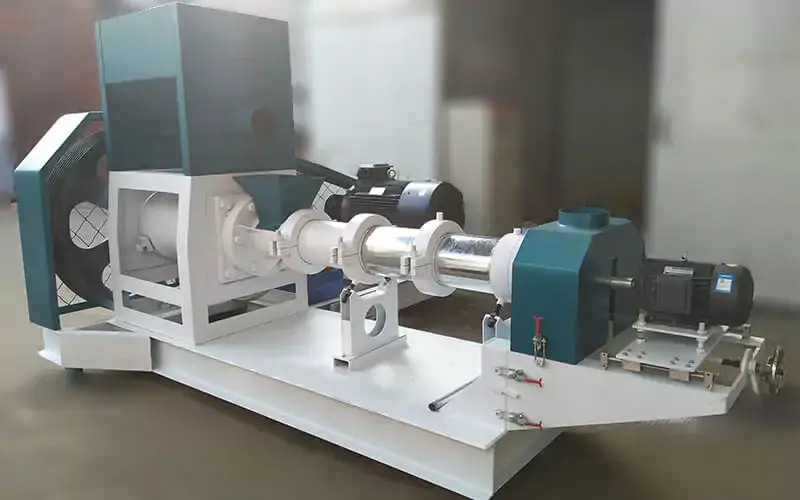
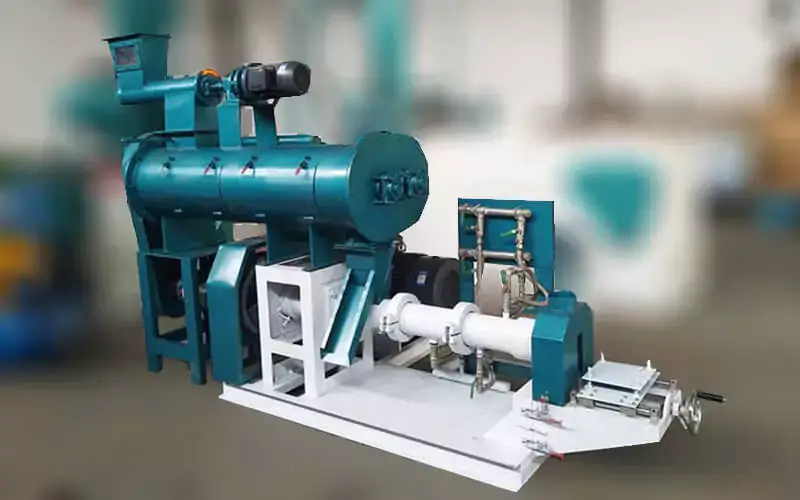
Fish Feed Extrusion Process
Extrusion, including dry extrusion and wet extrusion, is the aqua fish feed extrusion process where the raw material is pushed forward in the barrel by means of screws and pressed through the die at the end of barrel. The general extrusion process involves a high temperature over a short time. Temperature higher than 100℃ is needed in order to achieve expansion of the feed as it leaves the die.
Understanding the differences between extruded feed and traditional pellet feed is important when choosing the right fish feed production method.
Dry Type vs Wet Type Extruder: Core Definitions
Dry Type Extruder
Dry type fish feed machine is the type of fish feed extrusion machine that does not require a steam boiler for heat or steam injection or jacket heating, and all product heating is accomplished by mechanical friction force. Without utilizing preconditioning, dry extrusion employs lower moisture levels. Therefore it is suitable for processing low moisture and high fat feed material.
Wet Type Extruder
While wet type fish feed extruder is a piece of more complex equipment with precision metering systems for steam or water injection into the conditioner and/or the extruder barrel. Preconditioning is a very important step in wet aqua fish feed extrusion process for chemical or physical reactions to take place. High temperature and high pressure process can kill the salmonellosis and bacterial infections and also makes the pellets easily to digest.
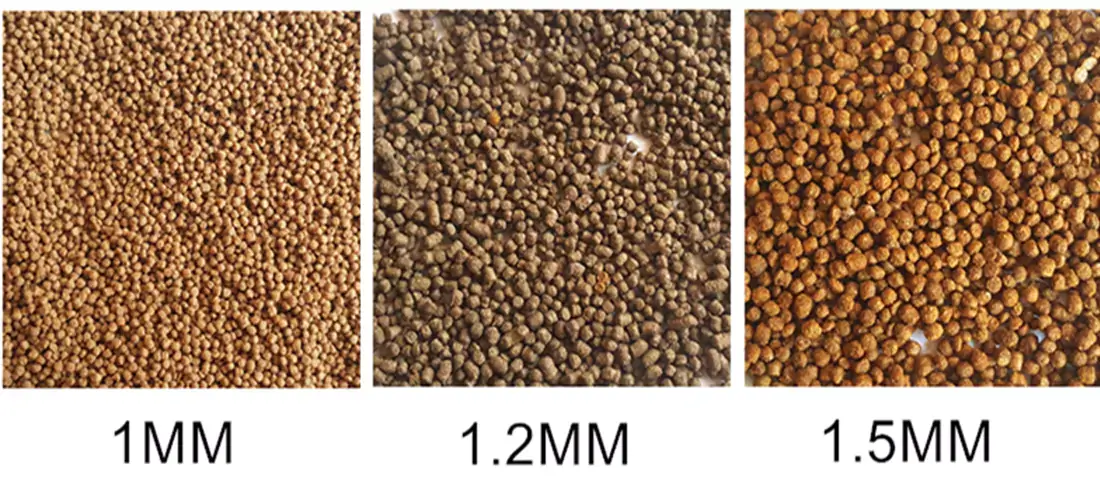
Dry vs. Wet Type Fish Feed Extruder: Which is Right for You?
| Feature | Dry Type | Wet Type | Value of Wet Type |
| Puffing Method | friction temperature | steam conditioning and friction | deeper puffing and easier to digest for fish |
| Appearance of Final Pellets | rough surface | smooth surface | Excellent Appearance, Large-Scale Manufacturer Quality |
| Parts Lifetime | wears out quickly | longer lifetime | low maintenance cost |
| Application | small and medium fish farms or feed factory | medium large feed plant for commercial | higher production capacity |
Extra 4 Key Differences Between Dry Type and Wet Type
1. Price
- Wet Type: the price for sale is higher
- Dry Type: the price for sale is lower
2. Structure
- Wet Type: has conditioner, need steam.
- Dry Type: has no conditioner, no need steam.
3. Pellet Quality
- Wet Type: final pellets much smoother and brighter.
- Dry Type: smooth, bright, but less than wet type.
4. Capacity
- Wet Type: higher production capacity than dry type with the same power
- Dry Type: a bit lower capacity with same power than wet type
video of dry type extruder

video of wet type extruder

