
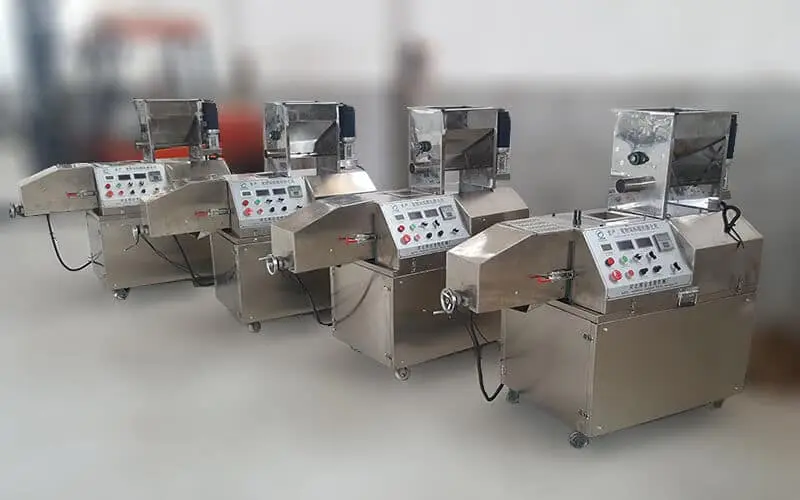
| Production Output | 0.5-5 t/h |
| Power | Electric motor |
| Voltage | 110-415V |
| Raw Materials | Cereal, corn, wheat, barley flour, soybean, oil seed meal/cake, fish meal, bone powder, etc |
| Type | single screw (stainless steel) |
| Final Pellet Size | 0.9-10 mm |
| Application | producing pet and fish food |
| Used For | cat, dog and other pet food production |
Advantages of Pelleted Pet Food
- Pet pelleted food is made up of various compounds such as vitamin, proteins, minerals, fibers, sugars, and acids, which not only can meet nutrient demand, but also can prevent the segregation of ingredients.
- Pet pelleted food can improve nutrient utilization due to heat treatment of the raw material ingredients. It is also much easier for pets to digest and absorb.
- Pet pelleted food can save storage space and reduce transportation cost.
- During grinding and pelleting, dust and raw material waste is reduced.
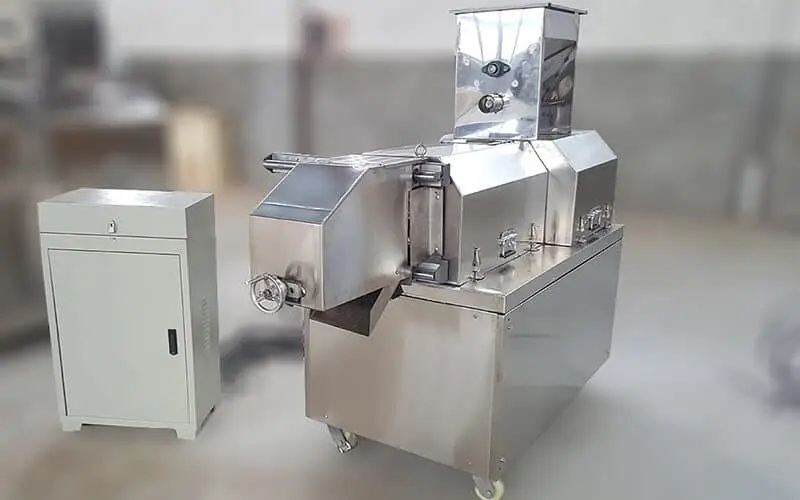
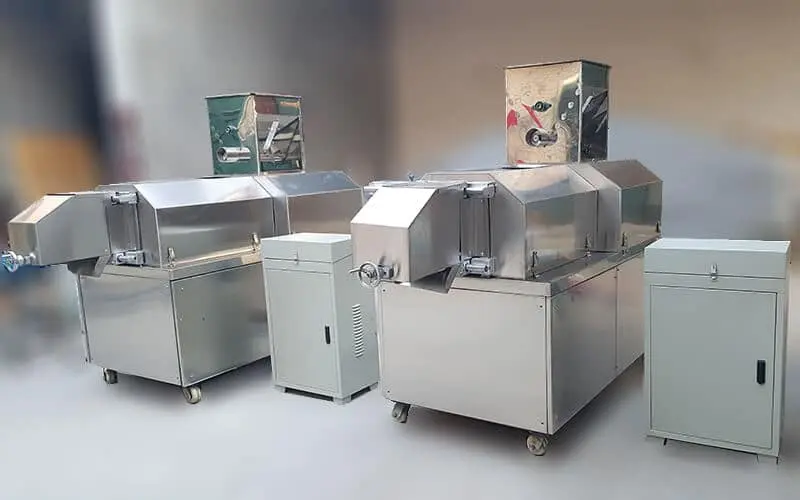
How Dry Pet Food Is Made: The Extrusion Process
While there are numerous ways to make dry pet food, the most commonly used process is extrusion by a pet food pellet extruder machine. This process was adapted for making pet food in the 1950s based upon technology used to make puffed breakfast cereals. The diagram on Making Pet Food by pet food making machine illustrates the process:
- Pet food ingredients are brought together in a mixing machine. Dry ingredients may be ground prior to introduction to wet ingredients. Once mixed together, they form a moist dough.
- The dough is heated in the preconditioner prior to introduction to the extruder.
- The raw materials enter the high-shear pet food making machine, which is the primary cooking phase for dry extruded food. The mixture is cooked deeply by the heat and mechanical pressure when it moves toward the discharge end of the machine. At the end of the extruder, the hot mixture is forced through a custom shaping die and immediately cut by a high-speed rotary knife. The internal moisture will evaporate rapidly and expand into porous kibble as these cut pieces encounter standard atmospheric pressure.
- Kibble is dried in an oven until its moisture content is low enough to make it shelf stable like a cookie or cracker. The drying oven is followed by a cooling phase.
- After cooling, kibble may pass through a machine that sprays on a coating, which is generally a flavor enhancer.
- Packaging (bags, boxes, pouches, etc.) is filled during the last step to precise amounts to meet the weight advertised on the label. The final result is finished pet foods or treats.
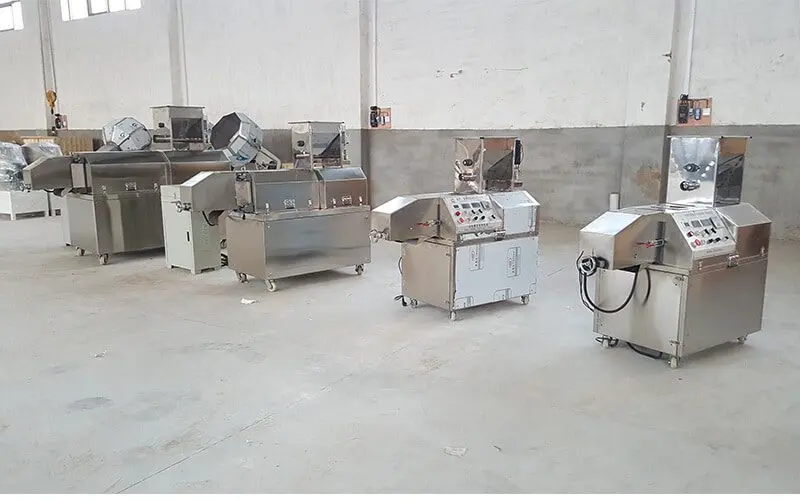
Pet Food pellet extruder Machine Working Principle
Extrusion is a thermomechanical process in which raw materials are transformed into a continuous shaped dough through mixing and heating. This will make hot materials forced through hole of the die mold under high pressure. The internal moisture will evaporate rapidly and expand into porous kibble as these cut pieces encounter standard atmospheric pressure. The diameter and shape of the die holes determines the final size of the pellets.
Pet food pellet extruder machine, which can also make floating fish feed, applies the technology of extrusion to produce pet food pellets from different kind of ingredients. Extrusion is a process of cooking the mixed ingredients under certain temperature, moisture and pressure. During the pet food pellet machine working, the temperature in the extruding chamber is 150-180℃ due to the electrical heater. The high temperature can kill bacteria and pathogen during machine running.
In the panel of the pet food pellet extruder machine there is a temperature indicator, once it reaches the set temperature, it will stop heating automatically by the reaction of thermocouple. During the high temperature ripening process, the starch and fiber of the raw material become swollen. Then under the pressure-tight condition, material will be formed into pellets by shaping mold. At the end of the main shaft there is a cutter to cut the pellets to certain length.
Pet Food Machine for Multiple Species: Dogs, Cats, and Aquatic Life
This pet food pellet extruder machine produces food for pets like cats and dogs, plus fish and bird feed. It’s ideal for home, small factories, and large commercial pet food industries. It is ideal for homemade dog food production with 50kg/h capacity.
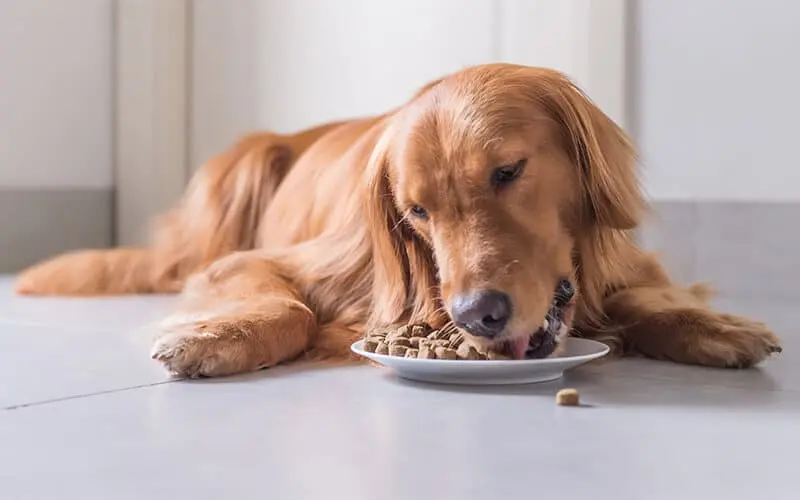
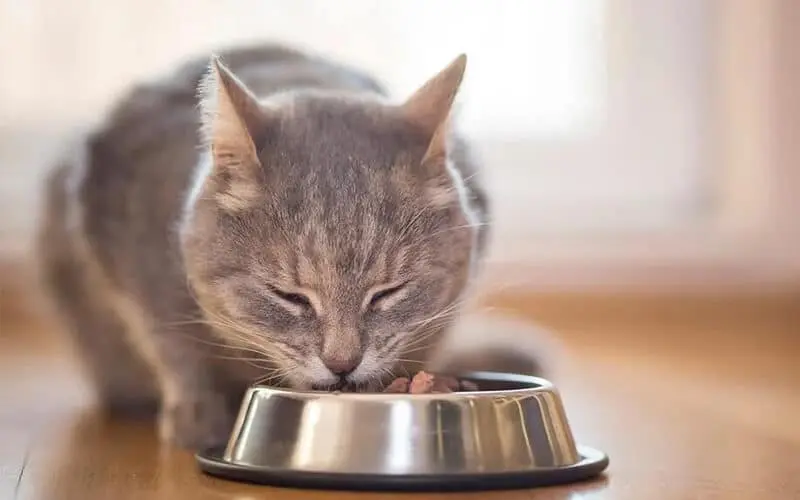
Custom food shape Production
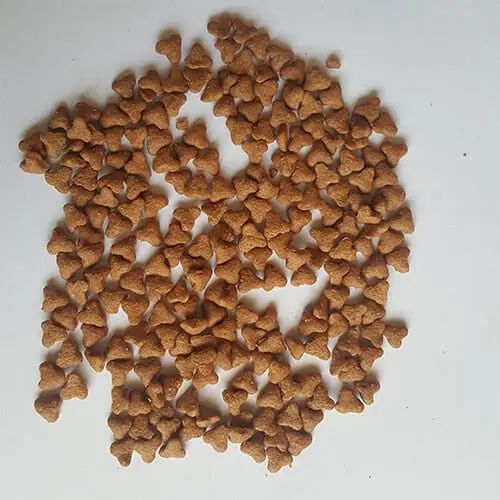
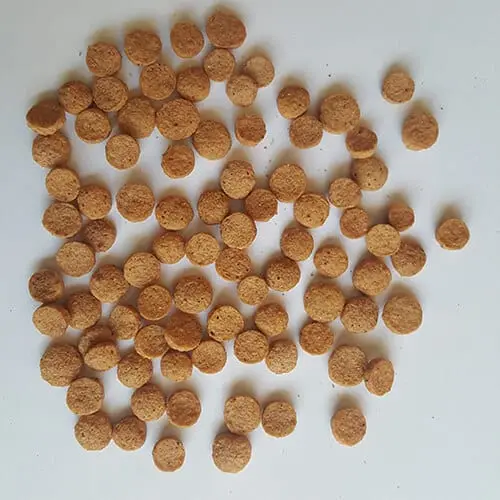
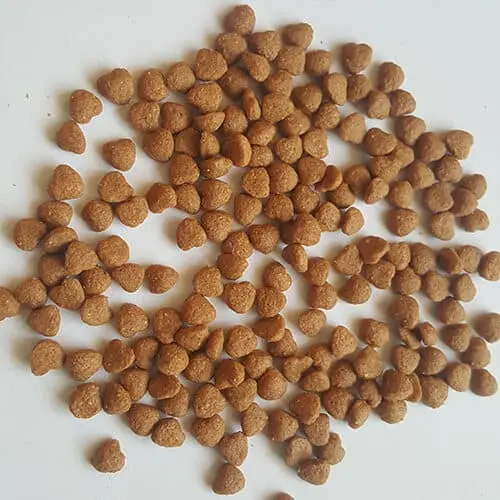
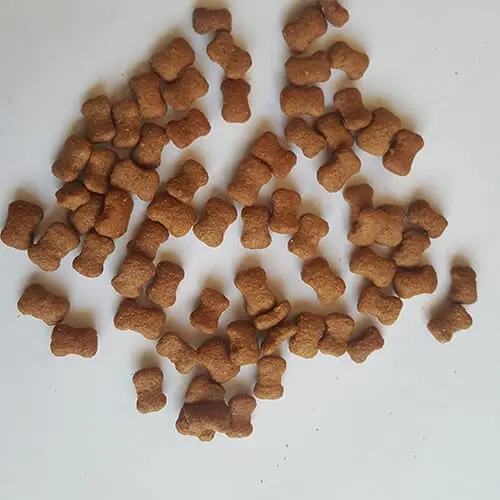
This pet food pellet extruder machine for dogs and cats can make food in shapes like triangles, pentagrams, bones, moons, hearts, etc. See the die hole shapes and final products below:
Equipment Selection: Standard vs. Stainless Steel
Stainless Steel Pet Food Extruder (GAS Series)
| Model | Capacity(kg) | Main Power(kw) | Feeding Power(kw) | Cutting Power(kw) | Screw Diameter(mm) |
| VTGAS-45 | 50-80 | 4 | 0.4 | 0.4 | 40 |
| VTGAS-55 | 100-150 | 11 | 0.55 | 0.55 | 50 |
| VTGAS-65 | 180-200 | 15 | 0.75 | 0.75 | 60 |
| VTGAS-75 | 250-300 | 18.5 | 0.75 | 0.75 | 70 |
| VTGAS-85 | 300-400 | 22 | 1.1 | 1.1 | 80 |
| VTGAS-95 | 500-600 | 30 | 1.1 | 1.1 | 90 |
| VTGAS-100 | 600-700 | 37 | 1.1 | 1.5 | 100 |
| VTGAS-125 | 700-800 | 55 | 1.1 | 2.2 | 125 |
| VTGAS-135 | 1000-1200 | 75 | 1.5 | 2.2 | 135 |
| VTGAS-160 | 1800-2000 | 90 | 2.2 | 3 | 165 |
| VTGAS-200 | 3000-4000 | 132 | 2.2 | 3 | 200 |
Standard Pet Food Making Machine (DGP Series)
| model | capacity (t/h) | power (kw) | feeding power ( kw) | screw diameter ( mm) | cutting power ( kw) |
| DGP-40 | 0.03-0.05 | 3 | 0.4 | φ40 | 0.4 |
| DGP-50 | 0.06-0.08 | 11 | 0.4 | φ50 | 0.4 |
| DGP60 | 0.1-0.15 | 15 | 0.4 | φ60 | 0.4 |
| DGP70 | 0.15-0.3 | 18.5 | machanism feeding | φ70 | 0.75 |
| DGP80 | 0.3-0.4 | 22/27 | machanism feeding | φ80 | 1.5 |
| DGP90 | 0.4-0.5 | 30/37 | 1.1 | φ90 | 1.5 |
| DGP120 | 0.5-0.7 | 55 | 1.1 | φ120 | 2.2 |
| DGP135 | 0.8–1.0 | 75 | 1.1 | φ133 | 2.2 |
| DGP160 | 1.0-1.5 | 90 | 1.5 | φ155 | 2.2 |
| DGP200 | 1.5-2.0 | 132 | 1.5 | φ195 | 3.0 |
pet food making machine working video

