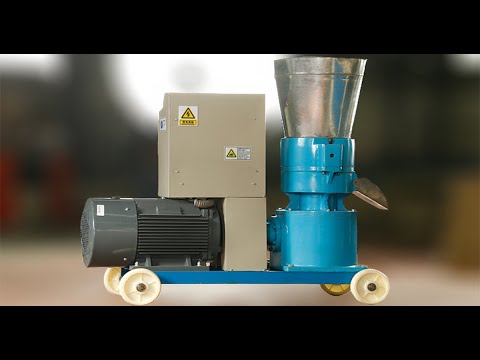
Flat Die vs Ring Die Pellet Mill: Which One Is Better?
Choose between flat die and ring die mills based on your needs. The flat die pellet granulator machine has low energy consumption and high material flowability, and is suitable for small family workshops. Although the ring die granulator has a large output, it hass higher total power consumption but better energy efficiency per ton of output in large-scale production.
The ring die granulator also has the characteristics of good granulation shape and high density (1-1.3%). By comparing two different pellet granulator machine, we can know the difference between them and their features. When buying a pellet mill, consider all factors limiting production to find the right equipment.
Why Invest in a Pellet Machine?
Before comparing technical designs of ring die and flat die, it is important to understand the commercial value of pelletizing. Smart farm owners invest in pelletizing to save up 30% cost on feed with local raw materials and reduce feed waste 50% through improving nutrient density.
The process is simple but effective. Raw materials are pressed through Rollers and die, in where the natural heat is generated, which activates internal binders and creates solid, hygienic pellets without needing extra additives.
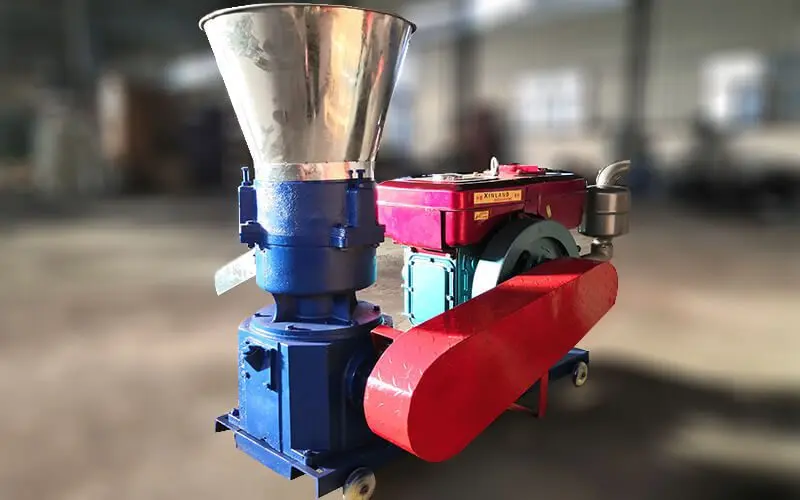
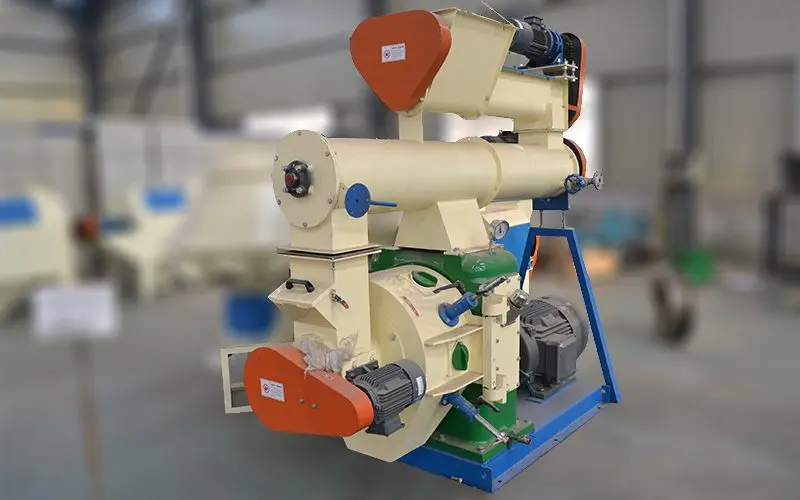
Difference Between Flat Die Pellet Mill and Ring Die Pellet Mill
Feeding Method:
The ring die granulator adopts a mechanical feeding method with a curve feeding trough, using high-speed rotary centrifugation to distribute material. The flat die pellet mill machine relies on the material’s own weight entering into the pressing chamber vertically.
Pellet Formation:
Flat die mills use a perforated disk with rollers that force material through holes. Ring die presses have a rotating ring and rollers that press material into pellets along the inner edge.
Maintenance and Cleaning:
Flat die pellet mills are easier to clean. You can access the pelleting chamber in a short time, which saves significant time when changing the die or rollers.
Wear and Service Life:
Ring die pellet mills generally provide more uniform wear distribution on die and rollers, improving long-term maintenance stability. This indicates that the long-term cost to maintain and repair the roller and ring die is lower. Flat die mills use large bearings to enhance bearing capacity, but wear patterns differ.
Energy Efficiency:
Ring die pellet mills are more energy-efficient for large-scale operations. The flat die pellet granulator has low energy consumption for small workshops but lower total efficiency for industrial output.
Production Capacity:
The capacity of flat die pellet mills typically ranges from 100 kg/h to 2000 kg/h. Ring die pellet mills handle much larger scales, ranging from 800 kg/h up to 20 tons/h.
Purchasing Price:
Flat die pellet mills are small, lightweight, and affordable for home use. Ring die mills are much larger and more expensive, designed for serious commercial investment.
Power Source:
Flat die machines support both electric and diesel motors. Ring die pellet mills are typically driven by electric motors, while flat die machines may support both electric and diesel engines depending on design.
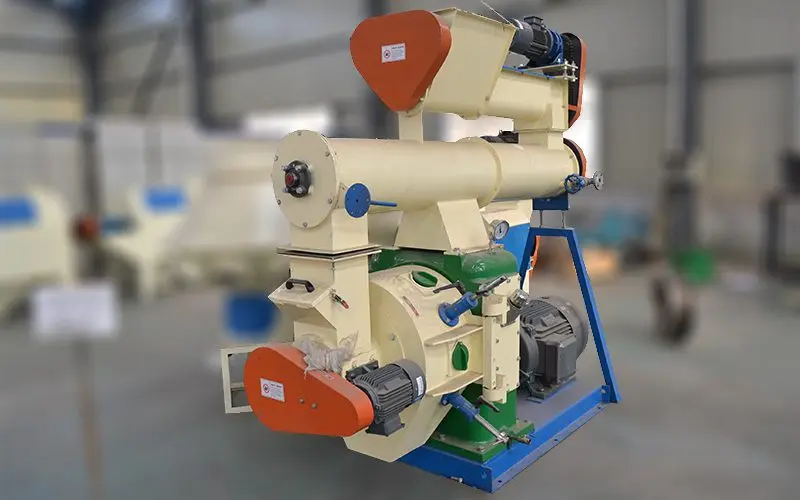

Deep Dive: What is Ring Die Pellet Mill?
A ring die pellet mill has a circular “die” as its main component, with 2 rollers rotating inside. These rollers extrude raw materials through die holes to form cylindrical pellets. Ring die pellet machine is widely used in granulation industry and large feed mill plant. The shape of the outer mold granulator is a wide cylinder, and the mold is vertical. Due to the high cost and large volume, it is not as common as flat die pellet machine.
Small ring die pellet machine are commonly used in the granulation business and other commercial purposes. As a professional Chinese manufacturer, we supply high-quality small ring die feed pellet mills and specially matched ring die granulators. So you don’t have to worry about finding the right molds, rolls and other consumables.
For high-capacity industrial production, explore the specifications of our [ Commercial Ring Die Pellet Mill ] equipped with steam conditioners and gear transmission.
ring die pellet mill parts: roller and die

ring die pellet mill rollers
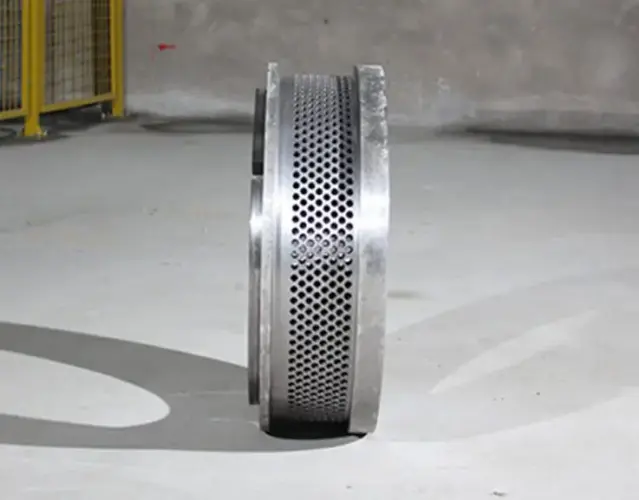
ring die pellet mill die
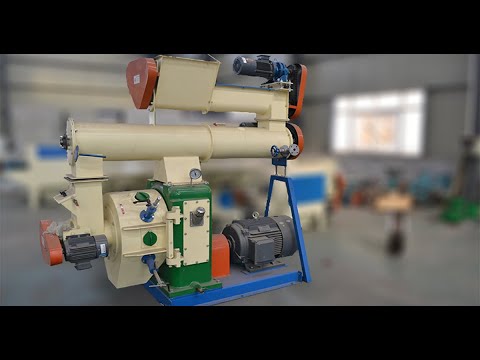
video of ring die pellet mill
Deep Dive: What is Flat Die Pellet Mill?
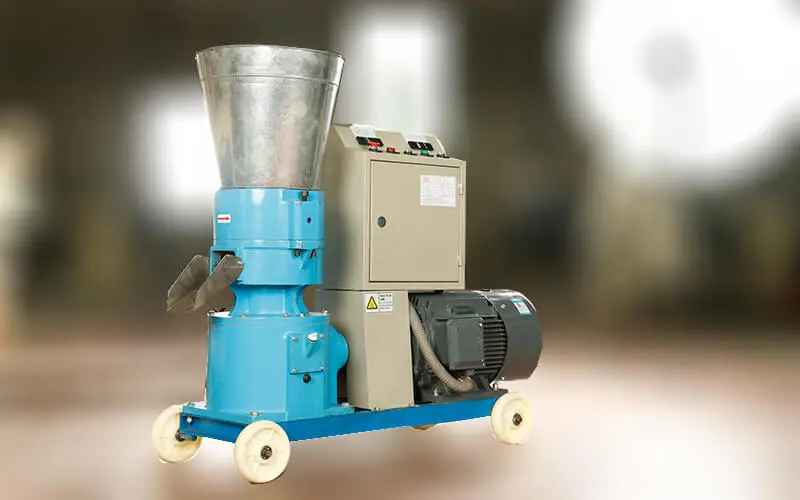
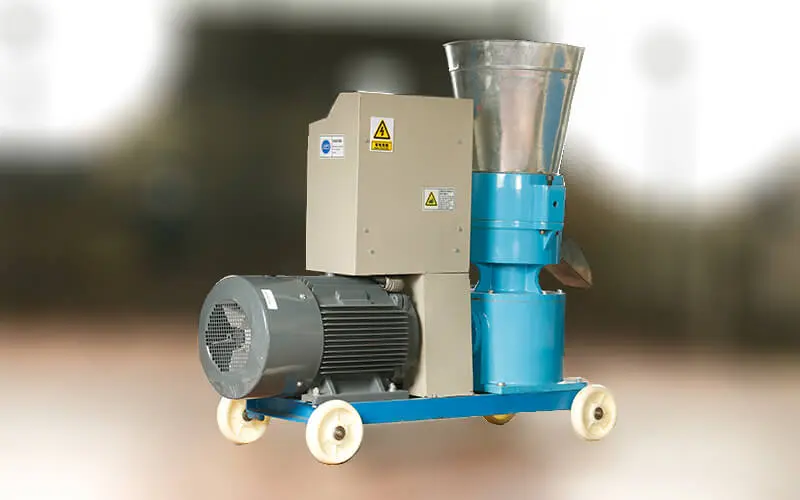
Flat die pellet mills are compact, designed for making feed and wood pellets. With a 200 mm die diameter and adjustable hole sizes, they convert wastes into pellets, such as sawdust and straw. These mills are low-noise, efficient, and versatile, perfect for small to medium production. The flat die suits sinking fish feed, whereas floating feed requires a floating fish feed machine.
Flat die pellet machine relies on flat die to granulate various raw materials. Different raw materials have different densities, and different types of particles have different densities according to their functional needs. For example, animal feed pellets are not as hard as fuel pellets. Therefore, different types of pellets and different pellet feedstocks require different flat die dies. The higher the compression ratio, the denser the particles produced. But if the compression ratio is too high, the material may clog the mold. To make high-quality pellets, use a flat die mill with the right compression ratio for your material. This mill makes both feed and wood pellets.
For small-scale farms requiring versatile power sources, explore our [ VTKLP Series Flat Die Pellet Mills ] which support electric, diesel, and PTO drives.
flat die pellet mill parts: roller and die
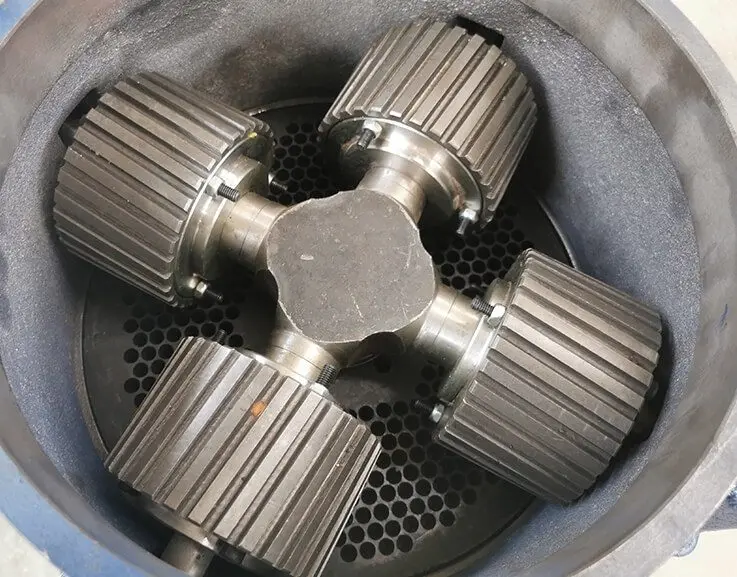
flat die pellet mill rollers
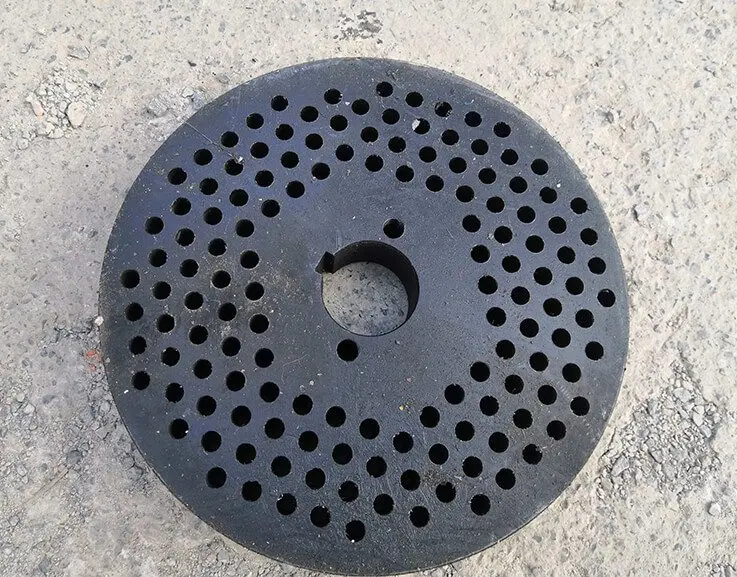
flat die pellet mill die
From Raw Materials to High-Quality Pellets
It is essential to understand what goes into your feed. Whether you are using energy sources like corn and wheat, or protein sources like soybean meal and fish meal, the quality of your raw materials directly impacts the final pellet durability. Choosing the right pellet machine ensures these ingredients are processed into uniform, nutrient-dense granules for your livestock.
video of flat die pellet mill