why starting fish farming business
In recent years, aquaculture has become a a key sector in global food production and is one of the fastest-growing food production sectors globally, with steady annual growth of around 3–6%. Fish is low in cholesterol, rich in protein, tasty and healthy. As a result, there is a high demand for fish and fish-related products around the world. Aquaculture plays an important role in the economy. It provides a large number of employment opportunities in the restaurant and service industries.
how profitable is fish farming business
The profitability of fish farming is determined by production scale, species selection, feed efficiency (FCR), survival rate, and market price volatility.
Small-scale fish farming typically generates a profit margin of 5–15%, while intensive or high-value species such as shrimp farming can reach 15–30% depending on management efficiency and disease control. Profitability is highly dependent on feed conversion ratio (FCR), survival rate, and disease management efficiency.

how to start fish farming business plan
1. Be sure to consider traffic and power
You should at first consider traffic problem. If there’s no easily passable road, one should carefully consider whether to build fish ponds in this place. Additionally, electricity is necessary. Currently, aquaculturists generally employ the high-density culture mode, with pumps playing a crucial role in the culture process. These pumps facilitate changing or adding water to the pond, making a stable voltage connection to electricity essential; otherwise, these pumps will easily burn out.
2. be sure to Consider water sources
Water quality is the key to success or failure in fish farming. For the water source, it is best to choose unpolluted or less polluted water. The amount of water in the fish pond must be sufficient all year round, otherwise it will affect the normal fish farming business.
3. confirming types of fish farming
There are two types of aquaculture: Common aquaculture systems include freshwater, brackish water, and marine farming. Major species include carp, tilapia, catfish, salmon, and shrimp depending on regional climate and market demand.
4. building fish pond
A well-designed fish pond can save resources during fish farming and usually lead to smoother operations, sometimes reducing production costs. Repairs should be based on the species being raised. In addition to leveling the fish pond, it is best to maintain at least 1.2 to 2.5 of water depth in the pond. It is better to build drainage system and water injection system separately (drainage and water injection should not share the same pipe).
5. preparing equipment for fish farming
- Pump: To ensure sufficient fresh water for the fish, you can use a pump to pump fresh water from a large nearby water source to the small pond or lake where you keep the fish.
- Back-up generators: A backup generator is important because a power outage means a failure of the oxygen system, which in a crowded pond can cause fish to die from lack of oxygen in a matter of minutes.
- Grading Equipment: A classifier can classify the fish into different classes. This link also enables counting the fish using a counting device.
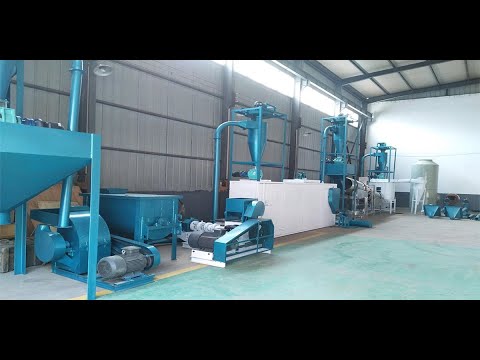
- Fish Feed Processing Equipment: In our years of equipping fish farms, we noticed one thing. Feed eats up 60% to 70% of your total budget. Buying commercial feed will squeeze your profit margins dry. So, what’s the fix? Make your own. You need to add fish feed processing equipment to your list. A basic setup isn’t complicated. You just need a feed crusher, a mixer, and a fish feed extruder. That’s it. This setup lets you control the exact nutrition going into your pond. Floating or sinking? You decide. We always advise our clients to get a dedicated fish feed extruder. It cooks the raw grains and shapes them into water-stable pellets. Check our fish feed machine list to build your own feed line.
6. Learn skills of Fish Farming
It is important to have some fish farming skills. Skills can be learned by working on a successful farm. It teaches you how to deal with diseases, manage water quality, market conditions, and feed processing. There are also government-run farms that are running training programs. You can take these types of courses to gain skills before to start fish farming business.
video of fish feed mill factory for fish farming business