Introduction: Choosing the Right Pellet
Nowadays there are many fish farm to feed catfish, golden fish, koi, and so on other kinds of fishes, but which kind of pellets is better for koi, floating pellets or sinking pellets? Some people prefer floating fish feed pellet mill to make floating pellets, because they not only can their fishes, and enjoy hand feeding, but also because they can see what is happening to their food. They worry a bit about with sinking pellets at the bottom of the water but we can not only just for checking our fishes and enjoy our hand feeding,we should think about our fish features and live habit.
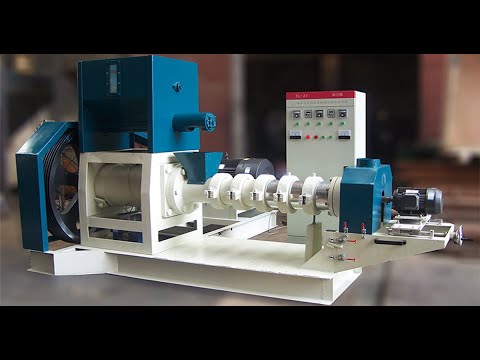
If you want to learn how to make fish feed that optimizes growth while reducing costs, understanding the technology behind the pellet is essential. Many commercial farmers ask how to make floating fish feed that stays buoyant for 24 hours. The answer lies not just in the ingredients, but in the precision of the 4-Zone Extrusion Logic.
Technical Parameters: The Science of Buoyancy
- Temperature Control (The 4-Zone Logic): To Make Floating Fish Feed: Set extruder temperatures high. Zone I: 50°C, Zone II: 80°C, Zone III: 130°C, Zone IV: 150°C. To Make Sinking Feed: Set temperatures lower. Zone III: 100°C, Zone IV: 110°C. Note: Because these temperatures are pre-set, the actual friction heating temperature by the screw speed(RPM) also matters, if the zone IV temperature of the machine reaches to 150°C, but the pellets are not puffed, please check if the screw of the machine wear or starch ratio.
- Starch Threshold: Starch is the expansion engine. Floating fish feed pellets: Starch content not less than 20%. Sinking pellets: Starch content 10%-15%. Relative density is 1.2-1.3.
- Moisture Levels: Higher moisture makes puffing harder. Floating fish feed: Control moisture at about 15-18% during extrusion. Sinking feed: Control moisture at about 20%.
Core Benefits: Reduced Waste & Better Growth
- High starch gelatinization: Treating raw materials at high temperatures increases starch gelatinization to 80-99%, aiding fish digestion.
- Improve water stability and environment: Floating pellets decompose less in water, letting farmers check fish health and feed intake.
- Water absorption: Controlling the extrusion moisture content over a wide range during processing helps improve the water stability of the final feed. These particles absorb more water, hold their shape longer, and reduce nutrient loss. It benefits pellet technology quality and fish health.
- Better digestion and absorption: Fish feed pellets break down quickly in the stomach, losing fewer nutrients and enhancing nutrient absorption.
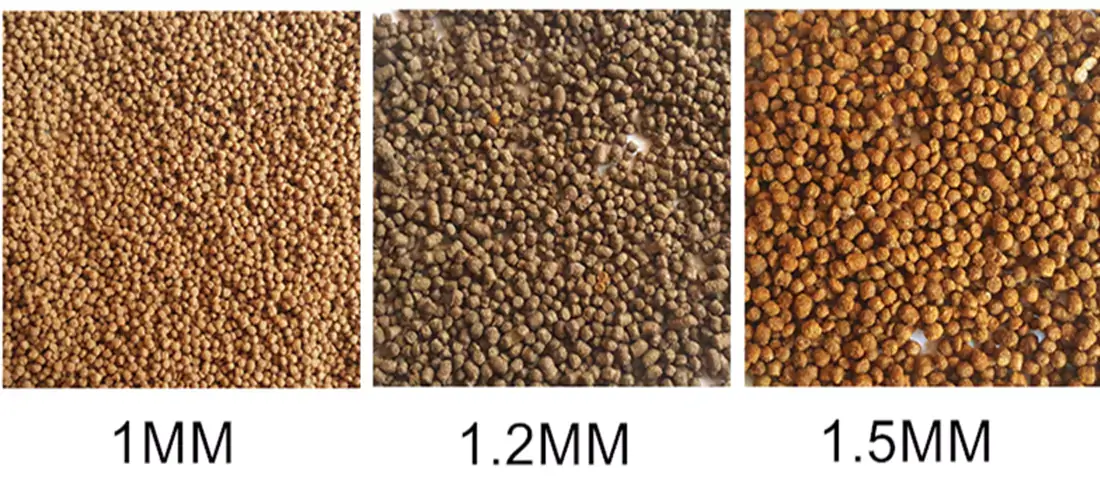
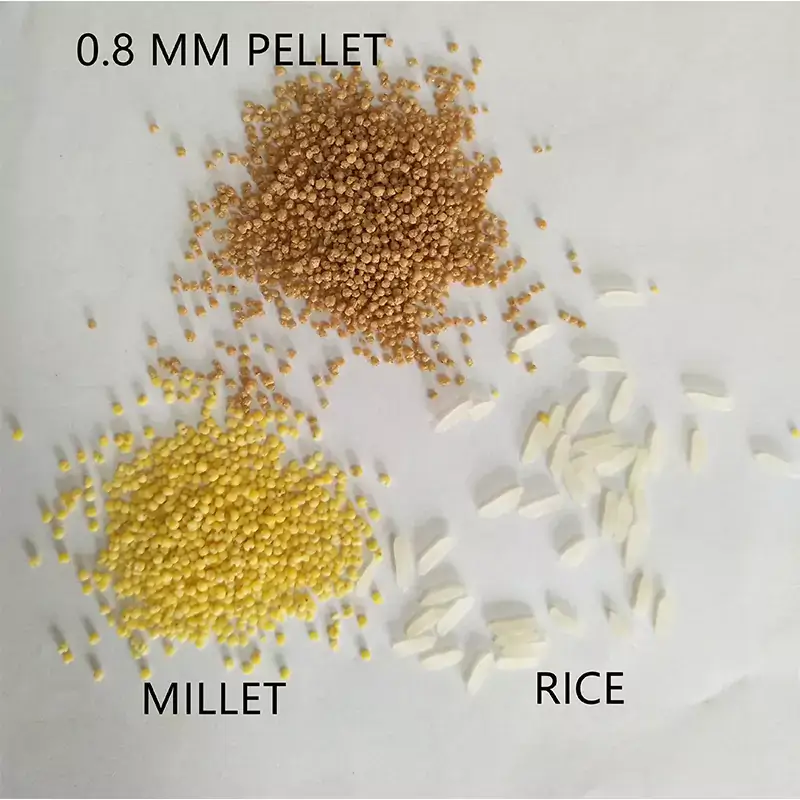
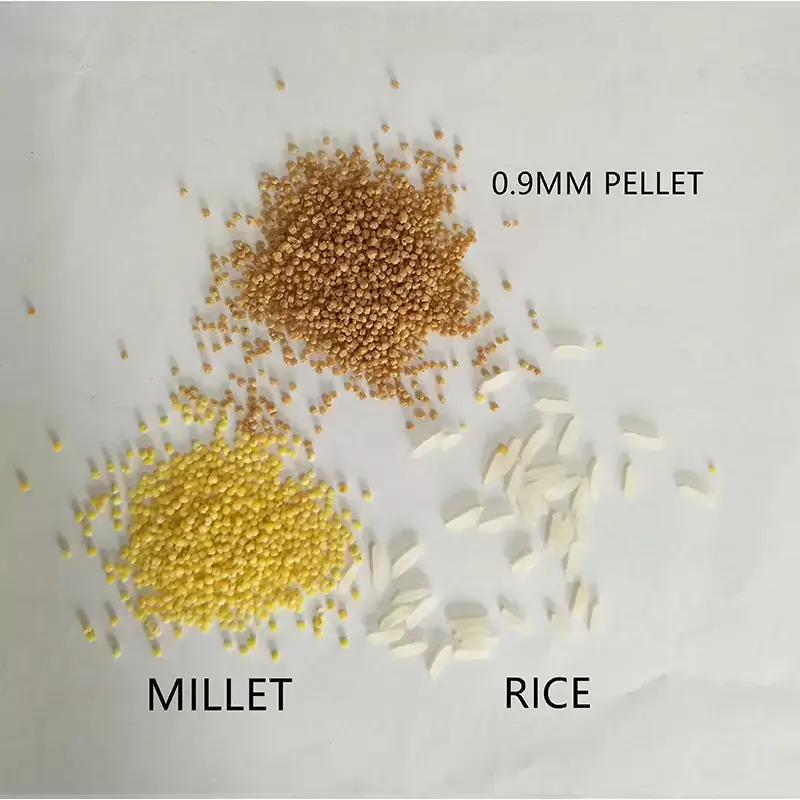
- Feeding environment: Fish are raised in water, so feed pellets must have a certain stability to maintain their shape and nutrition. Smaller fish feed particle size helps improve stability.
How to Make Floating Fish Feed Step-by-Step
- Selecting and prepare raw materials: soybean meal, cottonseed meal, corn kernels, wheat flour, fish derivatives, plant derivatives, algae, oils, minerals, proteins. You can check our specific fish feed formulation.
- Grinding raw materials: You need to grind raw materials into powder form before producing feed pellets. The grinding process of raw materials is crucial for making feed pellets. the process determines the success of the pellet production. Therefore, a fish feed crusher is necessary. and you can check how to choose right fish feed grinder.
- Mixing raw materials: Ensure a full and even mixture of all raw materials. Add trace vitamins and minerals during this stage. You can mix vitamins and minerals in small amounts with the feed ingredients during mixing. If you don’t want to make your own fish feed pellets, after crushing the raw materials,you can use the fish feed mixing machine mixing your own fish feed.
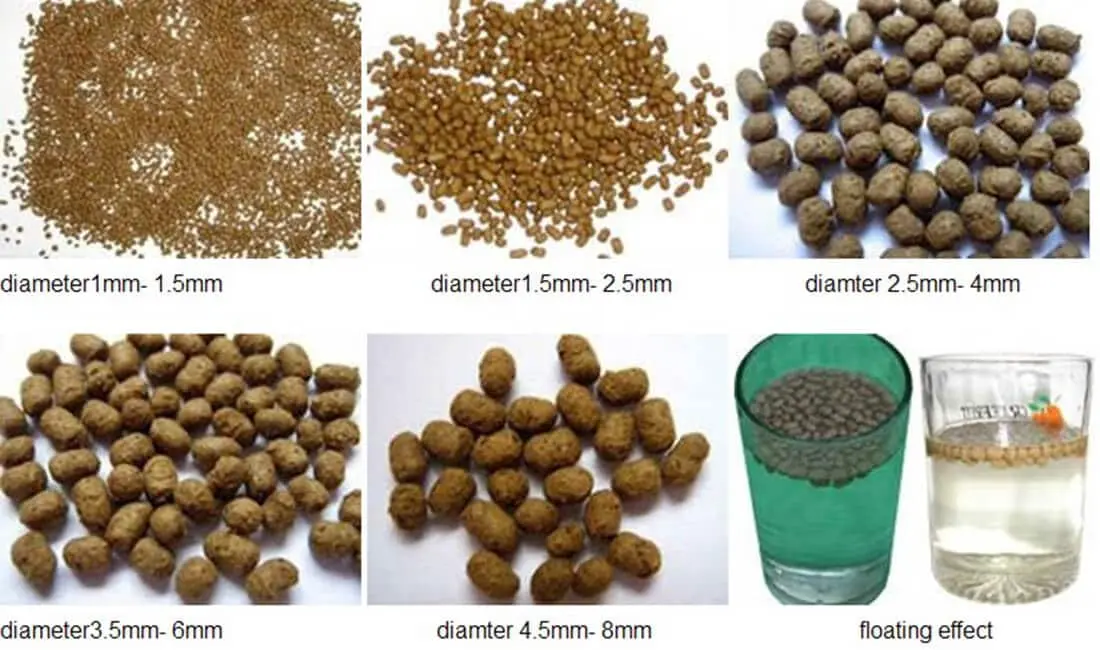
- Extrusion process: The floating fish feed mixture is passed through a fish feed pellet extruder. Set the proper diameter for the die, and during the floating fish feed extrusion process, the floating pellets are chopped or broken into smaller lengths.
- Drying of finished pellets: It is difficult to store and pack granules with too high moisture content. Drying the granules with a fish feed dryer to a moisture content of less than 10% or less. The temperature should be stored below 60ºC.
- cooling final pellets: Pellet cooling When the temperature of the oil-sprayed pellets increases, they become soft, and can easily break. To avoid loss in this regard, the feed pellets must be cooled, and are consequently hardened. The cooling type adopted by most fish pellet plants is the counter flow cooler where the fish feed pellets are in opposite direction to the air cooling them.
- Fish feed pellet packaging: the produced feed can not be used up at one time, the floating fish feed pellets can be put into bags or containers, which can prevent insects, mice, moisture, and long-term storage. This is the last step and last one equipment in fish feed production line.
Machine Features & Feed Management
- Dry vs. Wet Type Extruders: Dry type is economic for small and medium users. Wet type uses a steam boiler for higher capacity and is suitable for large feed pellet factories.
- Screw Sleeve Construction: Adopts enchase alloy steel strip structure. This guarantees long service life.
- Efficiency: High-temperature extrusion kills microorganisms, eggs, and pathogenic bacteria. This promotes feed quality and decreases digestive diseases.
- Feed Management Benefits: Floating fish feed pellets can float for 24 hours. There is no need for a feeding platform. Farmers observe the ingestion situation in real-time. This makes it easy to master the growth and health status of the fish. According to tests, using floating feed saves about 10% more than using powered or hard pellet feed.
how to make Floating fish feed video